
This Update includes the following
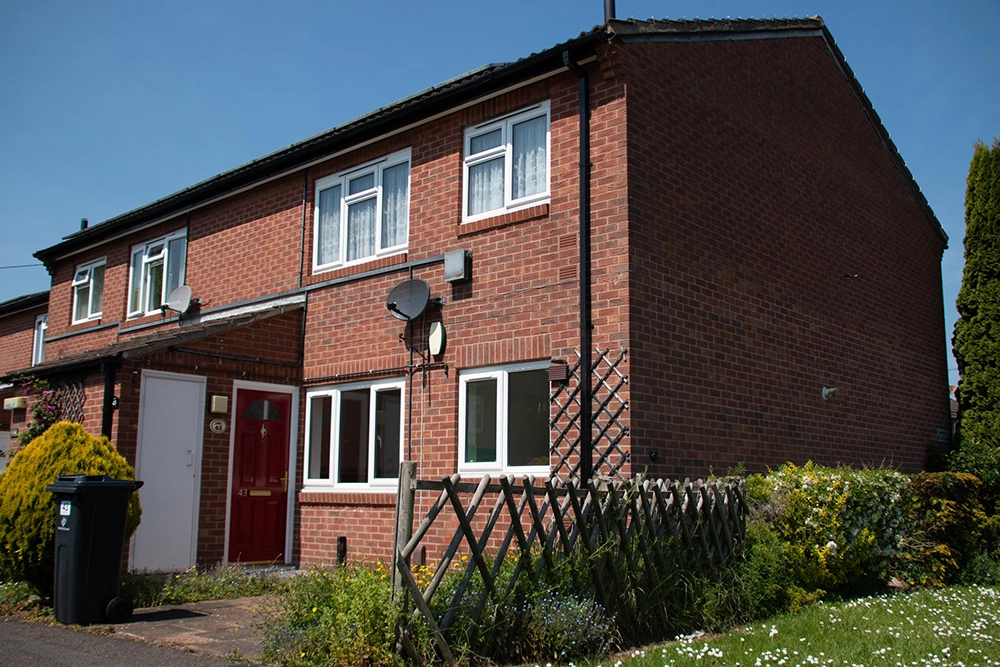
The King’s Speech – forthcoming legislative programme with implications for social housing:
Social Housing Bill
This proposed legislation includes changes to the Right to Buy scheme to better protect existing social housing and incentivise further development, along with measures to protect tenants who are victims of domestic abuse. The Bill is also being used to remove several unimplemented provisions from earlier housing legislation.
Right to Buy
The Bill follows through on measures outlined in the 2024 consultation on the future of the Right to Buy (RTB) scheme. Whilst recognising that the RTB provides an important route to home ownership for social housing tenants, eligibility requirements will be significantly tightened to protect existing social housing and give councils the confidence to scale-up delivery of new social housing supply.
Key Measures:
- Increasing the minimum tenancy required to be eligible for the Right to Buy from 3 to 10 years.
- Reforming discounts so they start at 5% of the property value and go up to a maximum of 15% or the cash discount cap (whichever is lower).
- Exempting newly built social and affordable homes for 35 years.
- Exempting rural properties from RTB.
- Exempting council market rent properties from RTB.
- Preventing tenants who have previously benefitted from RTB from further access to the scheme (with exemptions for domestic abuse and irretrievable relationship breakdown cases).
- Increasing the period of time in which the council has the right to ask for repayment of all or part of the discount on the sale of a property from 5 years to 10 years.
- Local authorities to have the right of first refusal in perpetuity when a former Right to Buy is sold.
- Statutory timescales for processing RTB applications will be increased along with the suspension of standard timescales for up to 6 months to allow councils to investigate fraud.
Domestic Abuse
The Bill includes additional protections for social tenants who are victims of domestic abuse, providing greater housing security and stability.
Key Measures:
- Stronger powers for landlords to take possession of a property where domestic abuse has taken place without the requirement for the victim to leave.
- A new mechanism to facilitate the transfer of the joint tenancy into the sole name of the victim, where a victim wants to remain in the home as a sole tenant.
- Powers to enable the courts to make an order to provide the victim with suitable alternative accommodation.
- A safeguard to ensure that perpetrators are unable to unilaterally end a joint tenancy in retaliation against possession action until proceedings have been concluded.
Repeal of unimplemented provisions from earlier housing legislation
Three measures introduced by the Conservative Government in 2016 are to be repealed.
Key Measures
- Repeal of provisions requiring the sale of high-value social homes.
- Repeal of provisions requiring local authorities to use fixed term tenancies, although councils will still be able to offer fixed-term tenancies where this is appropriate.
- Repeal of the requirement for mandatory pay to stay policies.
Remediation Bill
This legislation aims to address slow progress and delays in tackling the backlog of unsafe cladding in high rise buildings awaiting remediation.
Key Measures
- Legal duty to remediate – Landlords will be legally required to remediate buildings with unsafe cladding. Failure to comply will be a criminal offence punishable by unlimited fines and/or imprisonment.
- Deadlines – Buildings over 18 meters must be remediated by the end of 2029. Buildings between 11 and 18 meters must be remediated by the end of 2031.
- Remediation Backstop – This enforcement measure will allow Homes England or local authorities to undertake remediation if landlords fail to act, with costs recoverable from the landlord.
- Regulation – A new Regulatory Enforcement Unit within the Building Safety Regulator will oversee compliance, supported by additional funding and staffing.
- Construction Product Liability – The Bill removes legal barriers, enabling developers and contractors to pursue construction product manufacturers for their share of remediation costs.
- The Bill also addresses ongoing concerns regarding inconsistent external wall assessments and aims to ensure a more robust evidence-based approach to evaluating external wall fire risks.

Commonhold and Leasehold Reform Bill
Following the earlier consultation and publication of the draft Bill earlier this year, the government has signalled that it will press ahead with this legislation which aims to modernise property ownership and strengthen protections for leaseholders. Although existing council housing is not immediately impacted by the shift to commonhold, the changes to wider ownership models will have implications going forward.
Key Measures:
- Establishing a new legal framework for commonhold which will become the default tenure for new flats.
- Measures to make it easier for existing leaseholders to convert their buildings to commonhold.
- A cap on ground rents to £250 per year, falling to a peppercorn after 40 years.
- Replacement of the current leasehold enforcement regime of forfeiture, with stronger protections for leaseholders.
- Amendment of the Leasehold and Freehold Reform Act 2024 to make it easier and cheaper for leaseholders to extend their lease or buy the freehold.
Recent Government Publications and Announcements
Guide to the Social housing Bill
This sets out the key elements and objectives of the proposed legislation.
Letter from Matthew Pennycook to Sector Leaders
This letter includes details of a government review into the allocation and use of social housing to reduce empty homes, support the better use of existing stock. A key aim is to ensure homes go to those most in need, including strengthening council nomination arrangements and reviewing statutory guidance to better reflect local needs and support vulnerable households.
Homelessness code of guidance for local authorities
MHCLG has published an update to this guidance which now includes an additional clause 8.18 regarding assessment of vulnerability of applicants with a disability or another relevant protected characteristic.
Text of Housing and Planning Minister’s Speech to UKREiiF 2026
MHCLG has published details of Matthew Pennycook’s speech at the UK Real Estate and Infrastructure Forum on 19th May 2026. The speech sets out the government’s housing related achievements so far along with policy objectives and plans going forward.
Other Publications
Three recent publications have considered the case for introducing rent control in the private rented sector.
A Modern System for Fair Rents – How to make private renting affordable – This report published by the New Economics Foundation proposes a programme of emergency housing affordability measures including an immediate emergency brake on annual rent increases for PRS tenants.
High Housing Cost in the Private Rental Sector: the case for action – This report published by the Institute for Public Policy Research (IPPR) sets out the case for limiting rent increases in line with inflation and wage growth, to provide certainty for renters and reassurance for landlords that nominal rents will continue to rise.
How Tax reforms would make rent controls feasible to deliver – This report published by the Joseph Rowntree Foundation argues that the high level of returns generally available to landlords warrant intervention on rents — both to make rents more affordable for renters, and to curb the excessive returns landlords are currently able to make and the distortive effects they have on the housing market and wider economy.
Future Meetings and Events
Finance and Business Planning Meeting – Thursday 16th July 2026 (9.30 – 12.00)
Steve Partridge – Savills Director of Housing Consultancy will be leading this event for finance officers and others with an interest in HRA strategy and business planning.
The event is a free event that is open to CWAG members.
2026 CWAG Annual General Meeting
This year the CWAG Annual General Meeting will be on Thursday 1st October 2026. Further details will be available in due course.